
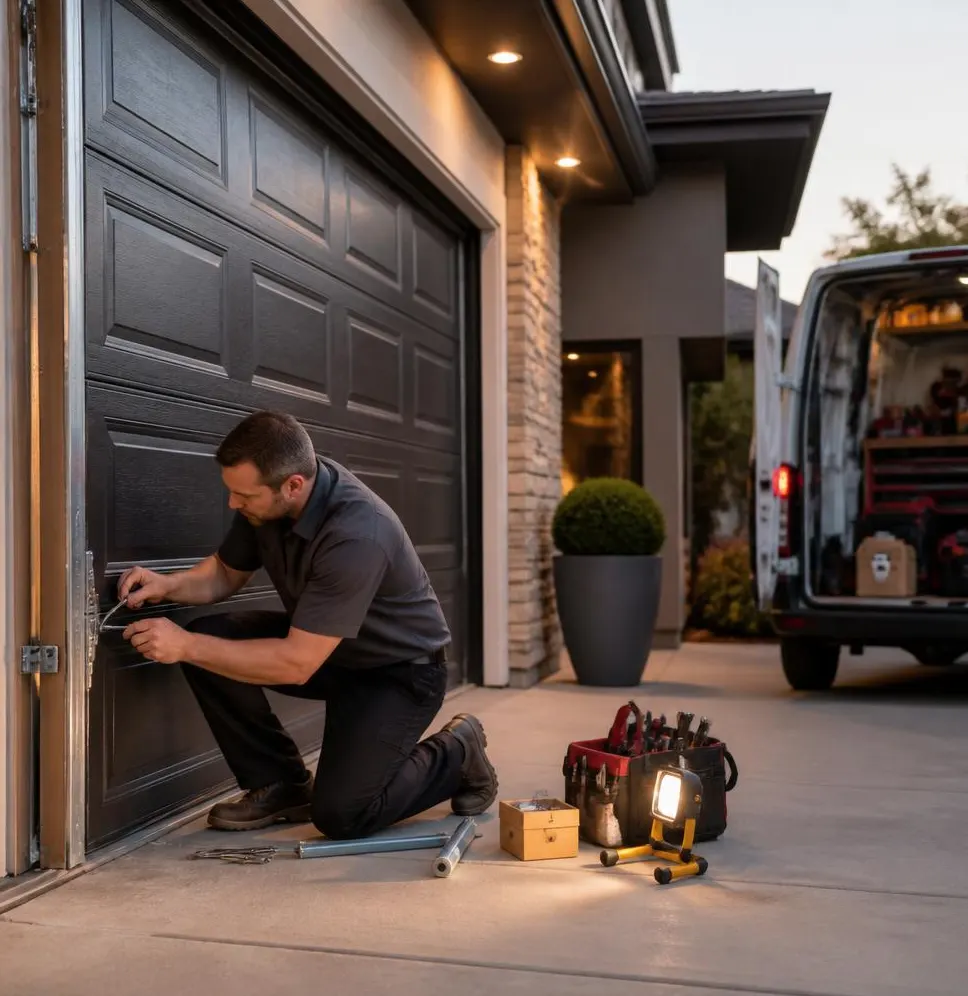
Skip this checklist one more season and the math gets ugly fast: a garage door that fails in high wind doesn't just mean a repair bill. Once wind gets inside a garage, pressure builds against the roof and walls from the inside out, and that's how homes lose roofs in storms that their neighbors ride out with minor damage. The national range to replace a garage door runs anywhere from a few hundred dollars for a basic panel swap to several thousand for a full wind-rated replacement. Roof and structural repair after a blowout costs multiples of that. The door is cheap insurance compared to what's behind it.
Why the Garage Door Is the Weakest Point in the Wall
Most exterior walls are solid, braced, and tied into the home's frame. A garage door is a large moving panel held in place by springs, tracks, rollers, and a handful of hinges and fasteners. It's engineered to open and close thousands of times, not necessarily to resist sustained wind-load pressure unless it's rated for it.
When straight-line winds or a storm's outer bands hit a standard, non-reinforced door, the panels can bow, buckle, or pop off the tracks. Once the door fails, wind rushes into the garage and pushes upward on the roof decking from underneath. This is why wind-load rules exist for garage doors in storm-prone parts of Florida — the door isn't just protecting your car and tools, it's protecting the structural integrity of the whole house.
Signs Your Door Is Already Compromised
- Visible bowing in the panels when the door is closed, even on a calm day
- Loose or rusted track brackets — common near the coast where salt air accelerates corrosion
- Gaps along the sides or top where daylight shows through, which also means wind and water can get in
- Worn or cracked weatherstripping at the bottom, letting in wind-driven rain during afternoon downpours
- Panels that flex or rattle when you push on them from inside the garage
Any of these mean the door is doing less work than it was designed for, storm or no storm.
A Pre-Storm Checklist That Actually Matters
1. Check the Track and Rollers
Moisture and humidity cause tracks to loosen and rollers to wear unevenly. Walk the full length of each track and look for gaps between the bracket and the wall, bent rail sections, or rollers that look flat on one side. A door that's slightly off-track under normal conditions will fail much faster under wind pressure.
2. Inspect Springs and Cables for Rust
Salt air near the coast speeds up corrosion on exposed metal hardware. Rusted springs lose tension unevenly and are more likely to snap under the extra strain of wind gusts pushing against the door. Frayed or rusted cables are even more dangerous — they can let a panel drop suddenly. Don't attempt to adjust or replace torsion springs yourself; they're under heavy tension and have sent plenty of DIYers to urgent care.
3. Tighten Every Fastener
Hinges, track brackets, and roller brackets all work loose over a season of heat, humidity, and daily use. A quarter-inch socket and twenty minutes is often all it takes to retighten what's accessible. This alone meaningfully improves a door's resistance to wind flex.
4. Check the Weatherstripping and Bottom Seal
Afternoon downpours this time of year push water sideways under pressure, not just straight down. A worn bottom seal lets water pool inside the garage, which leads to swelling in wood-trimmed doors and rust on steel hardware. Replacing it is inexpensive and takes less than an hour.
5. Consider a Bracing Kit or Wind-Rated Panel Upgrade
If your door was installed years ago and isn't rated for current wind-load standards, a retrofit bracing kit can reinforce the panels without a full replacement. For homes due for a new door anyway, a wind-rated model built for coastal Florida conditions is worth the upgrade — it's rated to stay intact under the kind of sustained pressure that bends standard residential doors.
6. Test the Opener's Manual Release
If power goes out mid-storm, you need to know the manual release cord works and that you can operate the door by hand if needed. Test it now, not during an outage.
When to Call Sydney Garage Door Experts
If you spot rust on springs or cables, panels that flex under hand pressure, or a door that's visibly off-track, don't wait for the next storm warning to deal with it. Our team handles Garage Door Spring Repair and Garage Door Cable Repair for homeowners across Brevard County, and we can tell you quickly whether a repair will hold up through hurricane season or whether it's time for Garage Door Installation & Replacement with a wind-rated model. We also offer Garage Door Maintenance & Tune-Up service, which covers the track, roller, hardware, and seal checks above in one visit — useful if you'd rather have a local garage door technician handle the inspection than do it yourself.
Storm season doesn't wait, and neither should your garage door. If you're searching for a garage door company near Sydney, FL, or anywhere from Melbourne to Cocoa Beach, call Sydney Garage Door Experts today and get your door storm-ready before the next system rolls in.