
If you can see daylight under your closed garage door or feel air moving along the edges, your bottom seal and weatherstripping are worn out and need replacing. The exceptions: if water is coming in from the top or sides of a door with intact seals, you're likely dealing with a warped panel or a track that's pulled away from the wall, not a seal problem. And if gaps only appear during storms with high wind, that points to the door flexing under pressure, which is a structural issue, not something a new seal will fix.
Why This Matters More Here Than Most Places
Garage doors in this part of Florida take a beating that doors inland don't. Humidity and afternoon downpours push water toward any gap at the bottom edge, and salt air near the coast speeds up rust on metal tracks and hardware. Wood-composite panels swell slightly with moisture, which can pull a seal loose from its channel over time. A cracked or flattened bottom seal doesn't just let in water — it's an open invitation for geckos, roaches, and rodents looking for a dry spot, plus the fine dust that blows in ahead of a storm front.
Tools You'll Need
- Tape measure
- Utility knife or sharp scissors
- Flathead screwdriver
- Replacement bottom seal (bulb-type, T-style, or bead, matched to your track)
- Rubber mallet
- Dish soap and water (to help the seal slide into the channel)
- Work gloves
- Adhesive-backed or nail-on weatherstripping for the sides and top
Step-by-Step: Replacing the Bottom Seal
- Identify your track style. Look at the aluminum retainer along the bottom of the door. It's either a T-slot, a bulb-style channel, or a simple flat strip. Bring a photo or the old seal to a hardware store to get a matching replacement.
- Raise the door and secure it. Prop it open fully or disconnect the opener and lock the door in the open position so it can't come down while you work.
- Pull out the old seal. It usually slides out of the track by hand; if it's brittle or stuck, cut it into sections first.
- Clean the channel. Years of grit, salt residue, and dead insects build up in the track. Wipe it out so the new seal seats fully.
- Cut the new seal to length. Measure the door width and add an inch or two for trimming.
- Feed the seal into the track. A little soapy water on the bead makes it slide in much easier. Work it through slowly, checking that it's seated evenly the whole way.
- Lower the door and inspect. Close it fully and check for daylight or gaps along the entire bottom edge. Trim any excess overhang at the corners.
Step-by-Step: Replacing Side and Top Weatherstripping
- Remove the old strip, including any old nails or adhesive residue.
- Measure and cut new adhesive-backed or nail-on strips for each side jamb and the header.
- Press or nail the strip into place with the door closed, so you can check for contact as you go.
- Open and close the door a few times to confirm it isn't catching or binding on the new material.
What's DIY and What Needs a Technician
Replacing a bottom seal on a standard track, or swapping out side and top weatherstripping, is a reasonable weekend job for most homeowners with basic tools. It typically takes under an hour and the materials are inexpensive.
Call in a technician when the seal looks fine but the leak or draft continues — that usually means a bent track, a warped panel, or a door that's no longer sitting square on the slab, none of which a new strip of rubber will solve. Same goes for rusted or corroded track sections near the coast, doors with an integrated astragal system built into an insulated panel, or any situation where fixing the seal means removing the door from its tracks. Those jobs involve spring tension and alignment work that's not worth the risk of doing yourself.
When to Call Sydney Garage Door Experts
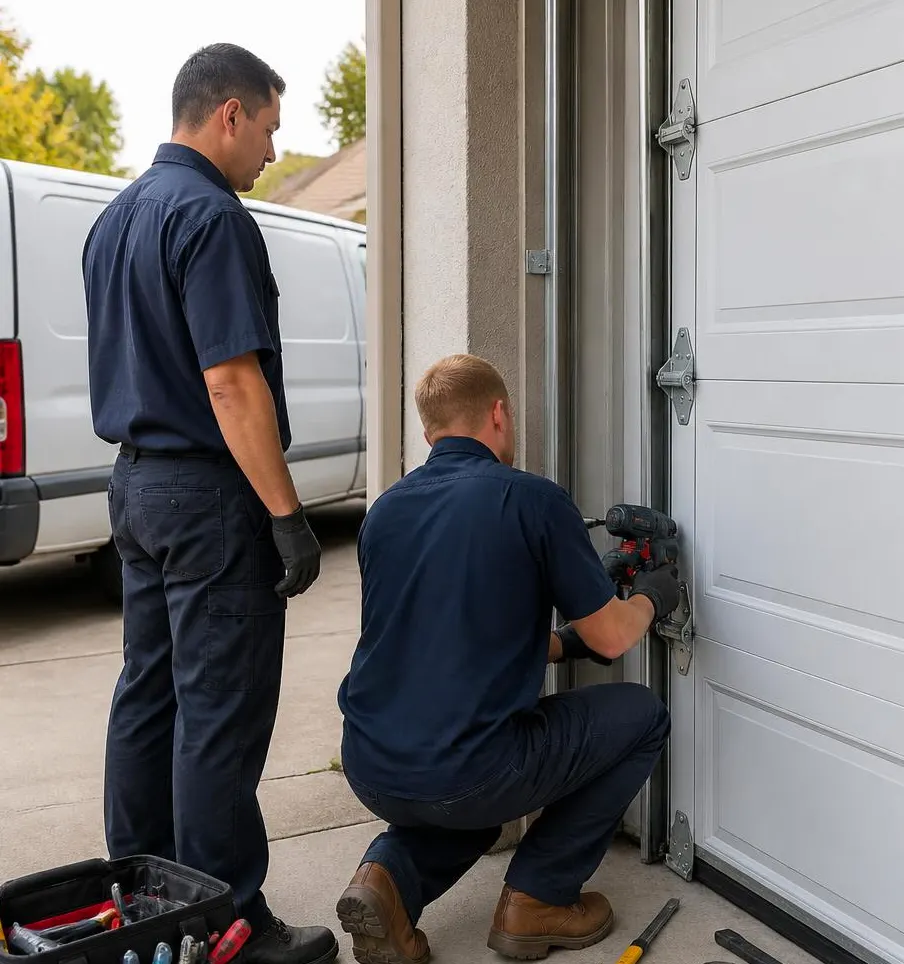
If you've replaced the seal and still have gaps, rattling, or a door that doesn't sit flush, that's usually a sign of a bigger alignment issue. Our technicians handle Off Track Door Repair to get the door running true again, and our Garage Door Maintenance & Tune-Up service checks rollers, hinges, and track condition at the same time, so you're not chasing the same draft every few months.
If your garage door in Sydney, Melbourne, Palm Bay, or anywhere else in Brevard County is letting in water, bugs, or dust no matter what you try, give Sydney Garage Door Experts a call — we'll find the actual source and fix it right the first time.